ARE ALL DOGS LACTOSE INTOLERANT?
You may have heard that dogs should never drink milk, yet social media is full of cute videos showing pups happily sipping from cereal bowls. No wonder the confusion feels real.
The truth is, many dogs are lactose intolerant, and the lack of clear information often leaves pet owners torn between treating their pets and protecting them. By understanding how a dog’s digestive system works, recognizing the signs of discomfort, and learning safe ways to offer dairy, you can avoid unnecessary health issues altogether.
Let’s clear up the myths and explain the biology behind whether your furry friend can eat ice cream.
Do Dogs Digest Dairy Products?
Dogs naturally wean off their mother’s milk around 6–8 weeks of age. After that, most no longer produce enough lactase to comfortably handle lactose, yet many of us offer them dairy treats without knowing whether it is beneficial or harmful.
Lactose is a carbohydrate found in dairy products that provides energy but requires the enzyme lactase for digestion. Lactase production declines after weaning (accustomation to food) in most mammals, including humans and dogs.
When lactase levels drop, undigested lactose reaches the colon, where bacteria ferment it, producing gas, cramps, diarrhea, and bloating, the classic symptoms of lactose intolerance.
The question may arise: are all dogs lactose intolerant?
Not all dogs are lactose intolerant, but most adult dogs have a limited ability to digest dairy.
Examples of Lactose Tolerance Levels
|
Dog Type |
Likelihood of Tolerance |
|
Puppies under 3 months |
High tolerance (normal lactase levels) |
|
Adults with no dairy exposure |
Low–moderate tolerance |
|
Adults with a regular little dairy in their diet |
Moderate tolerance |
|
Dogs with sensitive gut or small breeds |
Very Low tolerance |
Why Dogs React Differently to Dairy
A dog’s ability to handle lactose depends on several factors.
- Genetics: Some dogs naturally produce more lactase, the enzyme that breaks down lactose.
- Age: Puppies digest lactose easily, but lactase levels drop after weaning.
- Diet History: Dogs that have been exposed to dairy in their early days may tolerate small amounts better.
- Breed Size: Larger breeds sometimes handle lactose better than smaller breeds.
- Gut Health: A healthy digestive system can lessen symptoms even when lactose isn’t fully digested.
Even though dogs produce less lactase as they grow up, it doesn’t mean dairy is always harmful. Small portions may elicit no reaction, while larger servings can cause discomfort.
Symptoms of Lactose Intolerance in Dogs
Many owners miss the mild symptoms and only notice trouble when it is too late.
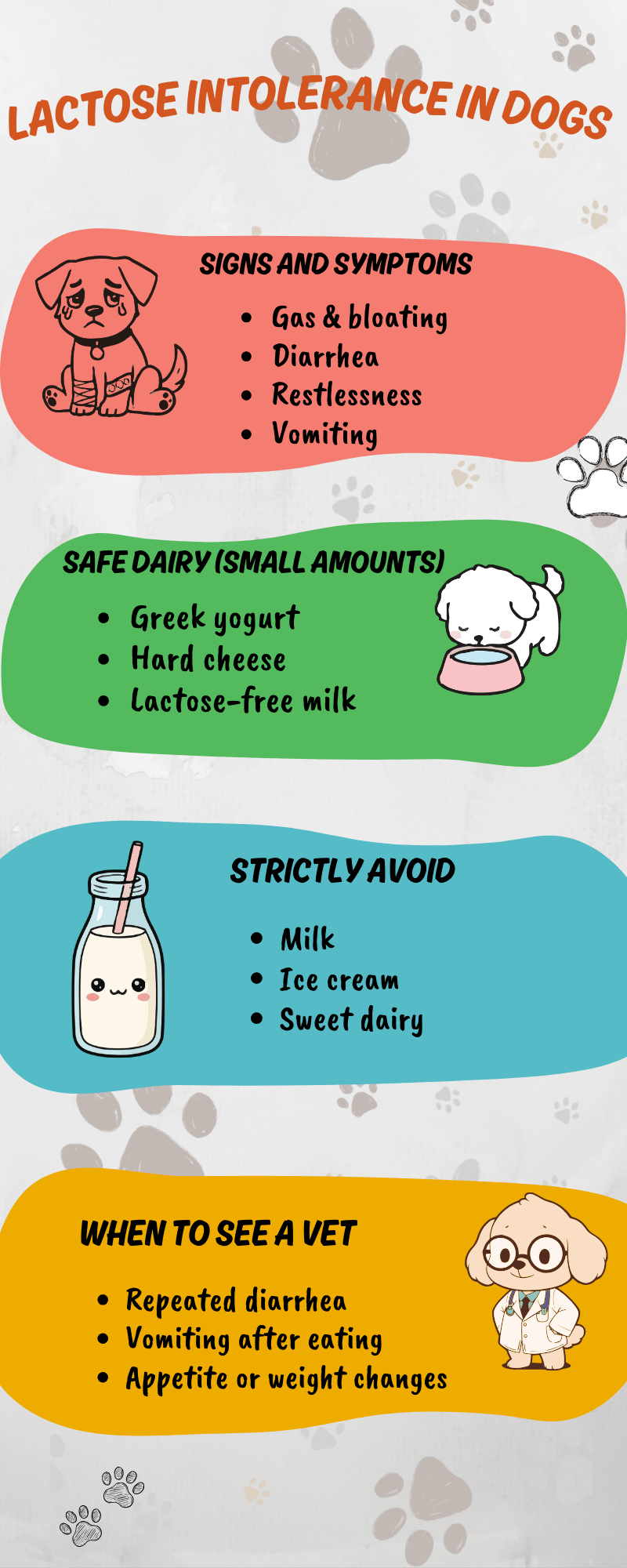
If a dog struggles to digest lactose, signs usually appear within 30 minutes to a few hours and may include,
- Gas and flatulence.
- Loose stools or diarrhea.
- Bloating and abdominal discomfort.
- Whining, restlessness, or pacing.
- Vomiting in more sensitive dogs.
When a dog lacks enough lactase to break down lactose,
- The lactose passes undigested into the large intestine.
- Gut bacteria ferment it, producing gas.
- Undigested sugar pulls water into the intestines.
- It leads to cramps, bloating, loose stools, and discomfort.
In extreme cases, reactions can be more severe, especially in puppies, seniors, or very sensitive dogs. Warning signs include,
- Repeated vomiting.
- Severe diarrhea leading to dehydration.
- Noticeable behavioral changes (restlessness, anger) due to pain.
Understanding Which Products Cause Problems
One of the biggest myths is that all dairy is totally bad for dogs, but dairy affects dogs differently depending on the amount of lactose it contains and how it is processed.
Knowing the difference helps dog owners make safer choices instead of avoiding dairy altogether.
Let’s explore common dairy products and how dogs typically respond.

1. Milk
- Milk contains high lactose levels, especially cow’s milk.
- Most dogs will show mild to moderate intolerance if given more than a few sips.
2. Yogurt
- Yogurt is fermented, meaning bacteria have broken down some lactose.
- Plain yogurt without sugar/artificial sweeteners is often better tolerated.
- Greek yogurt is even better due to lower lactose.
3. Cheese
- Cheese contains less lactose than milk, especially aged cheeses.
- Many dogs handle small amounts of cheese without issues.
- Hard cheeses (cheddar, Swiss): lower lactose.
- Soft cheeses (cottage cheese): higher lactose.
4. Ice Cream
- Ice cream is sugary and high in lactose.
- A poor choice for dogs is likely to cause digestive issues.
5. Butter
- Butter contains very little lactose.
- In moderation, most dogs tolerate butter better than milk and ice cream.
6. Lactose-free Dairy
- These products have the lactose removed.
- Safe option if free from xylitol or harmful additives.

Are There Dairy Alternatives for Dogs
Dairy can play a small role in dogs’ diets, but it should never be offered casually or as a full-fledged meal.
Also, every dog is different from one another, and a food that causes no reaction in one dog may trigger discomfort in another.
Here are ideas for introducing dairy carefully and preventing digestive issues while still offering safe, enjoyable treats.
Safe Dairy Practices
- Start with a very small amount, like a teaspoon.
- Monitor your dog for any symptoms over the next 24 hours.
- Keep a simple record of what you offer and how much.
- Always avoid sugary or flavored dairy products, especially those containing chocolate, artificial sweeteners, or xylitol.
Dog-Friendly Dairy Treat Ideas
Some dairy options are generally low-risk when given in moderation.
- Plain Greek yogurt.
- Low-fat cottage cheese.
- Small pieces of hard cheese.
- Lactose-free milk made specifically for pets.
Dangerous Additives to Avoid
Certain ingredients commonly found in dairy products are harmful or toxic to dogs. It will be helpful if you check ingredient labels carefully.
- Xylitol: Extremely toxic; can cause dangerous drops in blood sugar and liver failure.
- Chocolate flavoring: A toxic stimulant for dogs.
- Artificial sweeteners: Can disrupt digestion and worsen symptoms.
Non-Dairy Treat Alternatives
Many dogs enjoy treats that contain no lactose and are gentle on digestion, such as
- Plain pumpkin puree (supports gut health).
- Banana slices.
- Carrot sticks.
- Peanut butter only if it is xylitol-free.
- Dog-specific probiotic treats.

Veterinary Guidance and When to Seek Help
Digestive reactions after eating dairy can look simple on the surface, but they are not always caused by lactose intolerance alone. Dogs may show similar symptoms due to food allergies, intestinal infections, parasites, or chronic gastrointestinal conditions.
Occasional mild gas or loose stool after dairy may not be alarming. Nevertheless, these issues often overlap in appearance, and professional evaluation is important when symptoms are frequent or severe.
Repeated or worsening symptoms suggest that the digestive system is struggling to cope and may indicate a deeper issue beyond lactose digestion.
Consult a veterinarian if your dog consistently experiences:
- Persistent or recurring diarrhea.
- Vomiting shortly after a meal.
- Reduced appetite or food avoidance.
- Unexplained weight loss or weight gain.
These signs may point to conditions such as food sensitivities, inflammatory bowel disease, or malabsorption disorders.
How Veterinarians Evaluate Digestive Issues
To identify the cause, veterinarians typically use a step-by-step diagnostic approach to narrow down the problem and avoid unnecessary dietary restrictions.
- A physical examination to assess hydration, abdominal discomfort, and overall health.
- A detailed review of diet history, including dairy intake and recent food changes.
- Blood tests and fecal analysis to rule out infections, parasites, or metabolic issues.
- Elimination diets, where dairy and other potential triggers are removed to observe improvement.
Probiotics Support
In some cases, veterinarians may recommend probiotics to help stabilize gut bacteria and support digestion.
While probiotics do not correct lactose intolerance, they can improve overall gut resilience and reduce discomfort during dietary changes.
Conclusion
Not every dog is lactose intolerant, and intolerance can range from mild discomfort to repeated digestive upset.
While small reactions may pass, ongoing diarrhea, vomiting, changes in appetite, or weight loss suggest the digestive system is struggling and require a quick veterinary checkup.
For professional guidance on diet evaluation, physical examinations, and safe elimination diets, contact Urban Pet Hospital and Resort, the best pet hospital in Urbandale, with certified veterinarians dedicated to your dog’s health.
Add comment
Category List
Post List
Newsletter
Get notified when a new post is published.
CONTACT US