Why Is My Dog Scratching So Much in the Fall? Seasonal Allergies Explained
Fall brings cooler temperatures, colorful leaves, and more comfortable outdoor walks. But for many dogs, it also brings constant scratching, itchy paws, irritated skin, and recurring ear infections.
This condition is associated with canine atopic dermatitis, a chronic inflammatory skin disease that can cause allergic reactions to allergens such as ragweed pollen, mold spores, and dust mites that are rampant during and after fall.
Let's learn about the warning signs, veterinary treatment options, and practical ways to protect your dog's skin from seasonal allergies.
What Causes Dogs to Scratch More During the Fall?
Fall itching often occurs because of increased exposure to environmental allergens. These are normally harmless substances that trigger an exaggerated immune response in susceptible dogs.
According to studies, an estimated 10–15% of dogs may experience atopic dermatitis, and seasonal patterns are common among affected dogs.
In many cases, symptoms become more noticeable between late summer and fall, when certain weed pollens and damp outdoor environments occur.
Here are the most common contributors.
1. Ragweed and Other Fall Pollens
Ragweed is one of the common seasonal allergens affecting dogs in many parts of the United States, particularly during late summer and early fall.
As ragweed plants release pollen, microscopic particles can travel through the air and settle on a dog's coat, skin, and paws.
For allergic dogs, exposure may cause inflammation, redness, and persistent itching.
Other potential pollen triggers include,
- Grass pollen that remains present into early fall.
- Weed pollens such as pigweed and lamb's quarters.
- Regional tree pollen, depending on the climate and flowering season.
2. Mold Spores From Fallen Leaves and Damp Areas
Fall creates damp leaf piles, decaying vegetation, shaded garden areas, and wet soil that can contain mold spores that become airborne when disturbed.
Dogs that frequently explore wooded trails, gardens, or areas with decomposing leaves may encounter these allergens.
Exposure to Alternaria, Cladosporium, and Aspergillus, can cause allergies in dogs
3. Dust Mites and Indoor Allergens
House dust mites, which can live in bedding, upholstered furniture, and carpets, are a common environmental allergen for dogs with atopic dermatitis.
Unlike ragweed, dust mites are generally a year-round concern. However, increased indoor exposure or changes in household conditions may make symptoms more noticeable during fall and winter.
4. Flea Allergy Dermatitis
Some dogs develop flea allergy dermatitis (FAD), an allergic reaction to proteins in flea saliva.
Even limited exposure can provoke intense itching in a sensitized dog.
Common symptoms include,
- Scratching or chewing around the lower back.
- Hair loss near the tail base.
- Red, inflamed skin.
- Small crusts or scabs.
- Frequent biting around the rump or thighs.
7 Common Signs Your Dog Has Fall Seasonal Allergies
Dogs rarely show allergy symptoms in exactly the same way humans do. Instead of sneezing repeatedly, many dogs develop skin-related symptoms.
Here are the most common signs you should look for during the change of seasons.
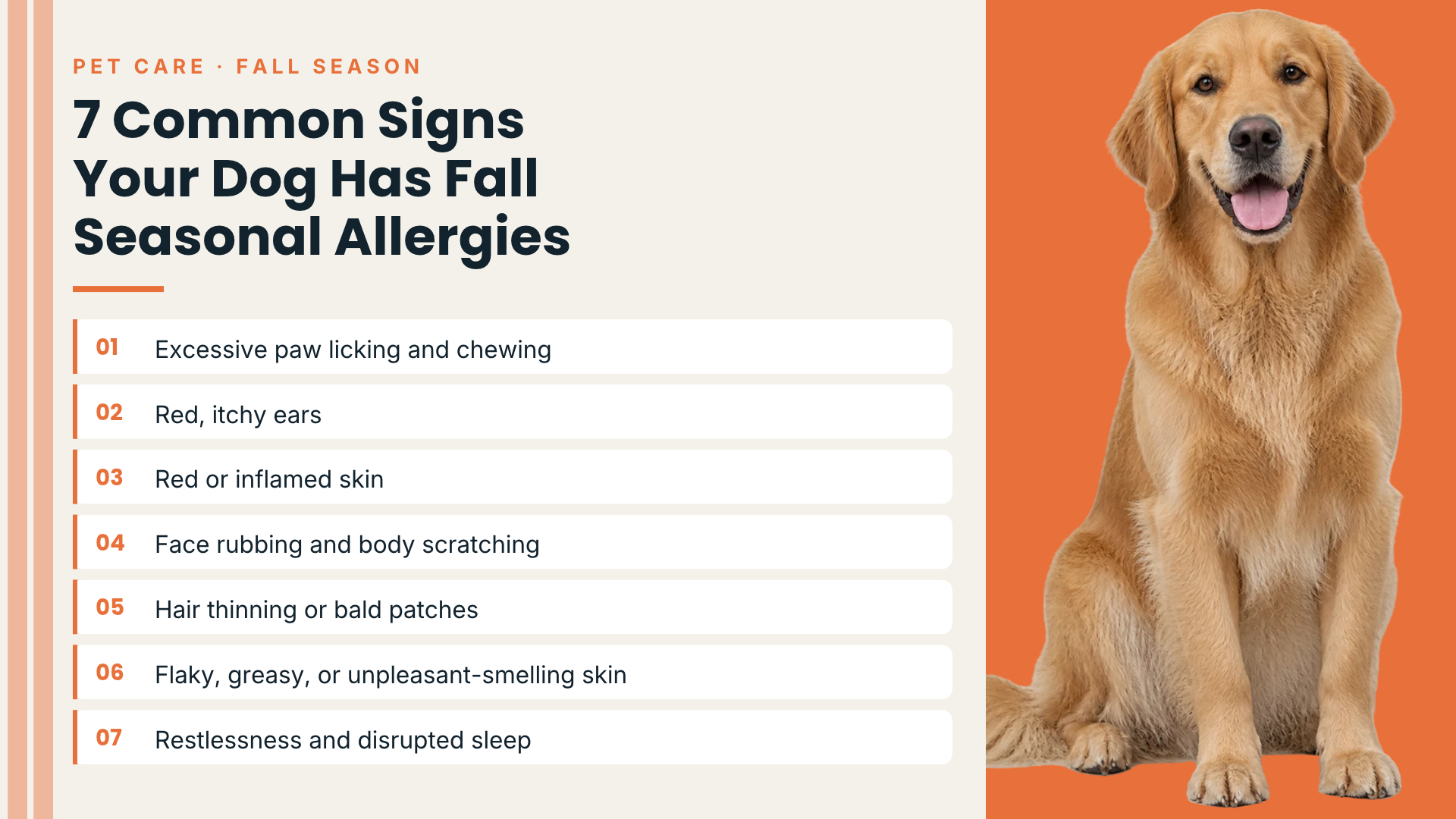
1. Excessive paw licking and chewing
Dogs may repeatedly lick or bite their paws to relieve irritation. The skin between the toes can become red, moist, or inflamed.
2. Red, itchy ears
Ear scratching, head shaking, odor, or discharge may indicate allergic ear inflammation or a secondary ear infection.
3. Red or inflamed skin
Irritation commonly appears around the belly, groin, armpits, paws, and face. Some dogs develop small bumps or irritated areas.
4. Face rubbing and body scratching
Your dog may rub its muzzle on furniture, scratch its neck, or roll against carpets to ease discomfort.
5. Hair thinning or bald patches
Repeated licking and scratching can break hairs or cause localized hair loss. Long-standing inflammation may also darken and thicken the skin.
6. Flaky, greasy, or unpleasant-smelling skin
These changes may accompany allergic skin disease, especially when secondary bacterial or yeast infections develop.
7. Restlessness and disrupted sleep
Persistent itching can interfere with sleep, reduce comfort, and make your dog unusually restless or irritable.
How Veterinarians Diagnose Seasonal Allergies in Dogs
A veterinarian generally diagnoses canine atopic dermatitis through a combination of medical history, physical examination, and exclusion of other causes of itching.
Here is the step-by-step process.
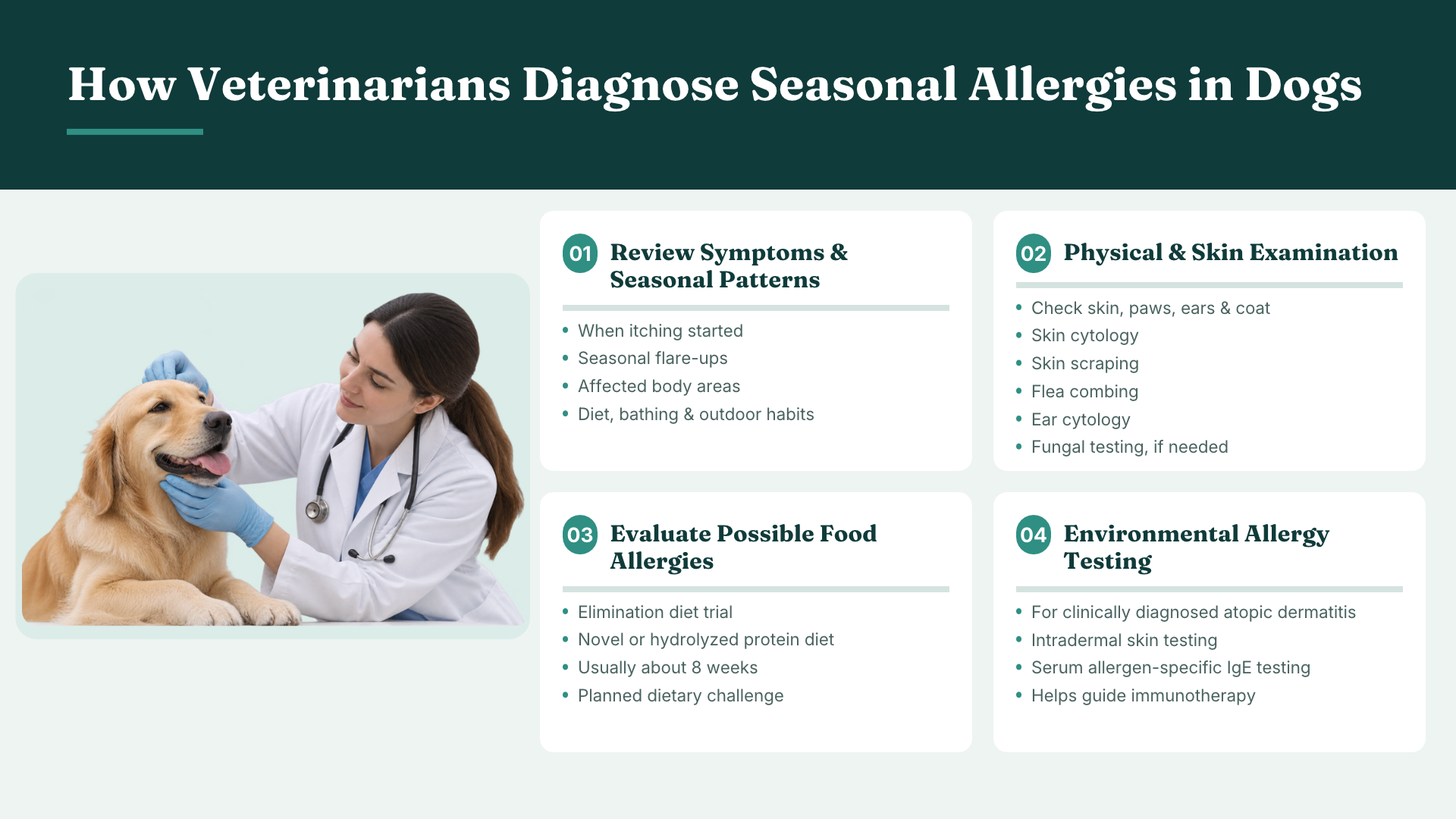
Step 1: Reviewing Symptoms and Seasonal Patterns
Veterinarians analyze when the itching began, whether it happens during particular months, and which parts of the body are most affected.
Keeping a record of previous treatments, diet, bathing habits, and outdoor activities.
Step 2: Physical and Dermatological Examination
A veterinarian will examine the skin, paws, ears, and coat for inflammation, infections, parasites, and other abnormalities.
Depending on the findings, tests may include,
- Skin cytology to identify bacteria or yeast.
- Skin scrapings to investigate certain mites.
- Flea combing to look for fleas or flea dirt.
- Ear cytology if ear inflammation is present.
- Fungal testing when ringworm is suspected.
Step 3: Evaluating Possible Food Allergies
When a food-related reaction remains possible, a veterinarian may recommend a controlled elimination diet trial.
It involves feeding a carefully selected novel-protein or hydrolyzed-protein diet exclusively for a prescribed period, often around eight weeks or longer depending on the case, followed by a planned dietary challenge.
Step 4: Environmental Allergy Testing
If a dog has been clinically diagnosed with atopic dermatitis, a veterinary dermatologist may recommend intradermal skin testing or serum allergen-specific IgE testing.
These tests can help identify environmental allergens for developing allergen-specific immunotherapy.
How to Treat Fall Seasonal Allergies in Dogs
To reduce inflammation, relieve discomfort, restore skin health, and prevent repeated flare-ups, treatment depends on the severity of the symptoms, the presence of infection, and how frequently allergies recur.
1. Veterinary Anti-Itch Medications
Several prescription treatments can help control allergic inflammation and itching.
These medications have different indications, potential adverse effects, age restrictions, and monitoring requirements.
Your veterinarian should determine which treatment is appropriate. Do not start or combine medications without veterinary guidance.
|
Treatment |
How it works |
Clinical role |
|
Oclacitinib (Apoquel) |
Inhibits Janus kinase signaling involved in itch and inflammation |
Managing allergic itching and atopic dermatitis in eligible dogs |
|
Lokivetmab (Cytopoint) |
Monoclonal antibody that targets IL-31 |
Reducing itch associated with atopic dermatitis |
|
Cyclosporine |
Modulates immune responses involved in inflammation |
Longer-term control of atopic dermatitis |
|
Corticosteroids |
Broadly suppress inflammatory responses |
Selected short-term flare management under veterinary supervision |
|
Antihistamines |
Block histamine receptors |
Sometimes used as supportive treatment, but often have limited benefit for significant atopic itching |
2. Medicated and Moisturizing Baths
Bathing can help remove pollen, dust, and other particles from the coat and skin.
Veterinarians may recommend moisturizing shampoos to support skin barrier function, or medicated shampoos when bacterial or yeast overgrowth is present.
Products containing ingredients such as colloidal oatmeal or skin-conditioning lipids may be useful for certain dogs, while antiseptic or antifungal formulas should be selected accordingly.
3. Treating Secondary Skin and Ear Infections
If allergic inflammation has already led to bacterial or yeast infection, anti-itch treatment alone may not be sufficient.
Veterinarians may use targeted topical therapy or, in selected cases, systemic antimicrobial medication.
4. Allergen-Specific Immunotherapy
For dogs with persistent or recurring environmental allergies, oral drops may be necessary.
However, improvement may take several months to a year.
5. Nutritional and Skin Barrier Support
Veterinarians may recommend diets or supplements containing omega-3 fatty acids, particularly EPA and DHA, as part of a broader management plan.
It is important to select an appropriate formulation and dosage with veterinary guidance rather than assuming any fish oil supplement is suitable for dogs.
Tips to Reduce Your Dog's Fall Allergy Symptoms at Home
Although you cannot eliminate every environmental allergen, you can reduce certain exposures and help prevent skin irritation from getting worse.
- Wipe paws after outdoor walks: Use a soft, damp cloth or veterinarian-approved pet wipe to clean paws and areas exposed to grass or pollen.
- Wash bedding regularly: Clean bedding, blankets, and washable fabric toys according to their care instructions.
- Keep indoor surfaces clean: Vacuum carpets, upholstered furniture, and areas where your dog sleeps.
- Manage indoor air quality: Control excess humidity, address moisture problems, and consider suitable air filtration.
- Avoid damp leaf piles: Limit your dog's contact with decomposing leaves and visibly moldy environments.
- Maintain appropriate flea protection: Follow your veterinarian's recommended flea-prevention schedule, even if you have never seen fleas on your dog.
Conclusion
If your dog starts licking its paws, scratching its ears, or developing red skin every autumn, seasonal environmental allergies can be the reason.
However, not every itchy dog has atopic dermatitis. Fleas, food allergies, skin infections, and parasites can produce similar symptoms, and identifying the actual cause is essential for effective treatment.
Contact Urban Pet Hospital for early veterinary assessment, appropriate allergy management, and consistent skin care throughout the fall and beyond.
Add comment
Category List
Post List
- Why Is My Dog Scratching So Much in the Fall? Seasonal Allergies Explained
- Pet Grooming in Urbandale: How Often Does Your Dog Really Need Professional Grooming?
- How Bringing in Other Pet Animals Home May Affect Your Dog
- When to Suspect and Treat Canine Parvovirus: Signs, Hospitalization & Recovery
- When to Use Gabapentin for Cats Suffering from Seizures
Newsletter
Get notified when a new post is published.
CONTACT US